
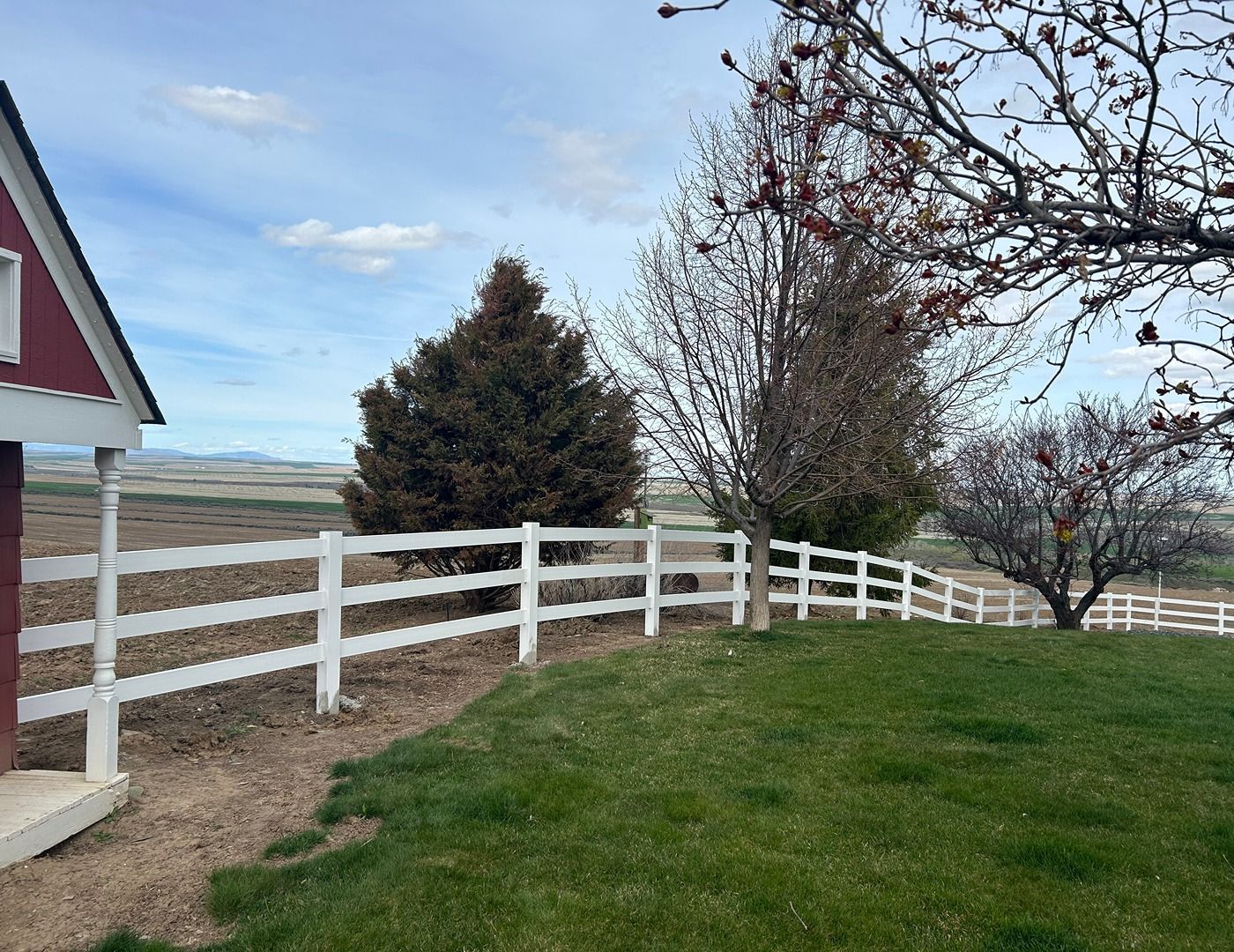
Built to Hold When the Wind Hits
Wood fence installation in the Wenatchee Valley for properties dealing with warping, wind stress, and exposed post failure
Lonestar Fence installs custom wood fences for residential and commercial properties across the Wenatchee Valley, built to handle the specific demands of North Central Washington's climate. The semi-arid conditions in the Wenatchee valley create a drying cycle that causes untreated or improperly finished wood to warp, split, and loosen at the post within a few seasons. Property owners who've dealt with leaning panels or cracked rails are dealing with a material and installation problem, not just a maintenance problem.
The installation process starts with custom design based on your property layout, then moves into post selection and placement. In the Wenatchee Valley soil conditions, post depth isn't a one-size number—rocky or sandy zones require deeper anchoring to resist the lateral wind loads common across the Columbia River basin. Pressure-treated posts or cedar are selected based on exposure, budget, and intended finish. Once framing is set, panel construction is completed on-site, and every fence receives a stain or sealant application calibrated for low-humidity, high-UV conditions—not the moisture-heavy formulations designed for western Washington.
Request an on-site estimate to review your property layout, post depth requirements, and finish options before any material decisions are made.
What Proper Wood Fence Installation Requires
Wood fence quality breaks down at two decision points: post installation depth and finish selection. A post set too shallow in the Wenatchee Valley wind corridor will shift within one or two seasons, pulling fasteners loose and misaligning panels. The correct depth depends on soil composition at the specific installation site—not a regional average. During installation, each post hole is evaluated before concrete is poured to confirm the anchor depth is appropriate for that section of ground.
After installation is complete, you'll notice the fence sits plumb without diagonal lean, panels align flush at each connection point, and the finished surface holds color rather than graying out within the first summer. A properly sealed cedar or treated-wood fence in this climate will resist surface checking—the shallow surface cracks that appear when wood loses moisture faster than it can stabilize—for significantly longer than an unsealed installation.
Lonestar Fence also provides maintenance guidance specific to semi-arid conditions, including recoat timing for sealants and what early-stage checking looks like so it can be addressed before structural damage follows. The scope of work covers design, installation, and finish—not just panel drop-in.
Common Questions About Wood Fence Installation
These questions come up regularly from homeowners and commercial property managers evaluating wood fence options in the Wenatchee Valley area.
What wood species works best for fencing in this climate?
Cedar is the most common choice for exposed installations in East Wenatchee because it contains natural oils that slow moisture loss during dry summers—pressure-treated pine is a cost-effective alternative when a stain or sealant finish will be applied regardless.
How does post depth get determined on a specific property?
Soil composition varies across Douglas County, so each post location is evaluated during installation—rocky substrate may require drilling rather than augering, and sandy soil sections require deeper concrete footings to maintain lateral stability against wind loads.
When is the right time of year to install a wood fence?
Late spring through early fall works well in East Wenatchee because soil moisture levels are stable enough for concrete to cure properly without freeze-thaw disruption, and sealants bond more effectively in moderate temperatures.
Why does my existing fence lean even though it looked solid when installed?
Lateral lean is almost always a post-depth issue—posts set at a uniform depth without accounting for soil variation will shift when wind loads apply repeated lateral pressure over multiple seasons.
What maintenance does a wood fence in this region actually need?
In the semi-arid Wenatchee valley, the primary maintenance task is reapplying sealant or stain every two to three years, depending on UV exposure—south-facing fence runs dry out faster and need attention sooner than shaded or north-facing sections.
Lonestar Fence works with both residential and ranch-scale properties in the Wenatchee Valley area—contact (509) 906-4484 to schedule a site evaluation and get a detailed material and installation estimate based on your specific fence run and soil conditions.