
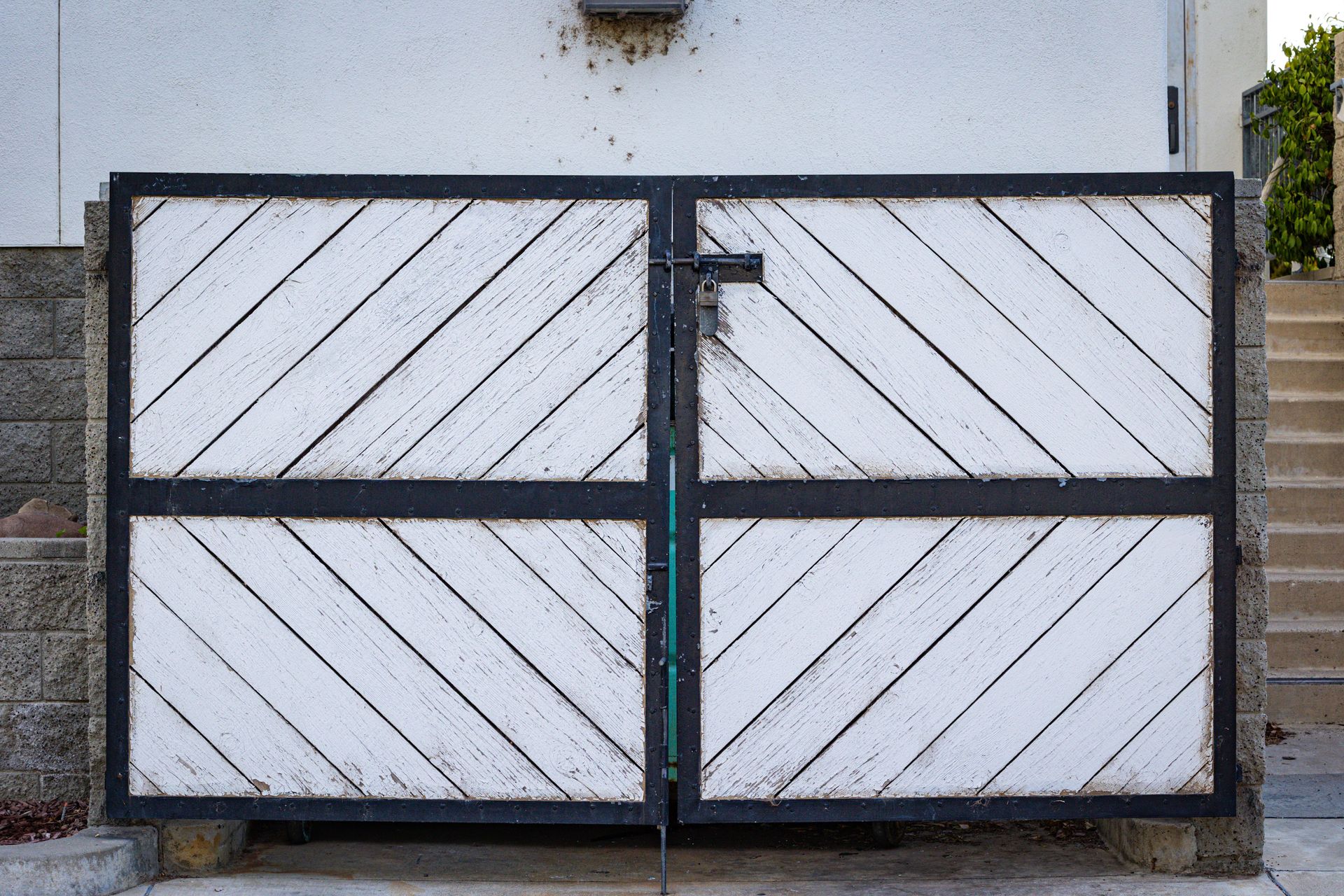
Sagging Gates Don't Realign Without Structural Fixes
Gate Repairs in the Wenatchee Valley for sagging frames, worn hinges, and post movement that prevent secure latching or consistent operation
A gate that drags on the ground, refuses to latch, or swings open under wind pressure isn't just inconvenient—it signals a structural problem that will worsen until the underlying cause is addressed. Lonestar Fence diagnoses and repairs sagging, misaligned, damaged, and non-functioning gates for residential and commercial clients across the Wenatchee Valley. The semi-arid climate here accelerates specific failure patterns: repeated wind loading wears hinge hardware faster than in calmer regions, and the soil settling common in the Columbia River valley causes post movement that pulls frames out of square over months or years.
Repair work starts with a visual inspection covering hinge wear, frame damage, and post movement—because misdiagnosis is what leads to repeated service calls. Replacing a hinge on a post that has already shifted won't restore alignment; the post movement has to be corrected first. After structural issues are confirmed, the repair sequence follows: post reinforcement or re-setting where needed, hinge replacement with appropriate hardware for the gate's weight, frame realignment, and full operation testing including latch engagement under normal and wind-assisted swing conditions.
Schedule a repair evaluation to identify whether your gate issue is a hardware problem, a frame problem, or a post movement issue before any parts are ordered.
Why Gate Problems Happen and How to Stop Them
Most gate failures trace back to one of three root causes: hardware that wasn't rated for the gate's actual weight, post footings that didn't account for local soil behavior, or frame geometry that was never square to begin with. In Wenatchee Valley's climate, those underlying weaknesses surface faster because wind loads and soil moisture cycles add mechanical stress that stable climates don't. Lonestar Fence approaches repair work by identifying which of those root causes applies before selecting the repair method, which determines whether the fix holds long-term or needs to be revisited.
After a properly executed repair, the gate moves through its full swing without dragging, the latch engages without lifting or forcing the frame, and the post stands plumb under a direct push test. Those three observable checks confirm the repair addressed the structural cause rather than just the visible symptom. For commercial properties where gate access affects daily operations, that confirmation matters before the repair crew leaves the site.
Some repair situations also reveal that a gate has reached the point where repair costs approach replacement costs—particularly when frame welds have failed, multiple posts have shifted, or the original hardware was undersized for the application. Lonestar Fence will identify that threshold during the initial inspection so the decision between repair and replacement is based on an accurate picture of the gate's condition.
What Property Owners Usually Ask About Gate Repairs
These questions come up frequently when property owners in the Wenatchee Valley and the surrounding Douglas County area are trying to understand whether their gate needs a minor adjustment or a structural repair.
How do I know if my gate needs a hinge replacement or a post repair?
A hinge replacement is appropriate when the hinge itself is bent, cracked, or stripped—but if the gate post has moved out of plumb, replacing the hinge without addressing the post will result in the same misalignment returning within one season.
Why do gates in this region seem to sag faster than expected?
Semi-arid soil in the Wenatchee valley is prone to seasonal moisture variation that causes gradual post movement, and consistent wind loads accelerate hinge wear on exposed installations—both factors that aren't as significant in more moderate climates.
What does a structural reinforcement repair actually involve?
Reinforcement typically means adding bracing to the gate frame at the diagonal, re-setting a shifted post with a deeper or wider footing, or replacing undersized hinge hardware with a heavier gauge rated for the gate's actual swing weight.
When is it worth repairing a gate versus replacing it entirely?
Repair makes sense when the frame is structurally sound, the post can be corrected, and the hardware failure is isolated—replacement becomes the better value when the frame has multiple failure points or the original installation was undersized for the application from the start.
How quickly can gate repairs typically be completed once the problem is diagnosed?
Most single-point repairs—hinge replacement, latch adjustment, or minor realignment—can be completed in one visit after the initial inspection confirms the scope; post re-setting work may require a return visit after concrete cures.
Lonestar Fence completes gate repair work for residential and commercial properties across Wenatchee Valley, Rock Island, and surrounding Douglas County. To get an accurate picture of what your gate requires, call (509) 906-4484 and arrange an inspection before the problem affects access security further.