
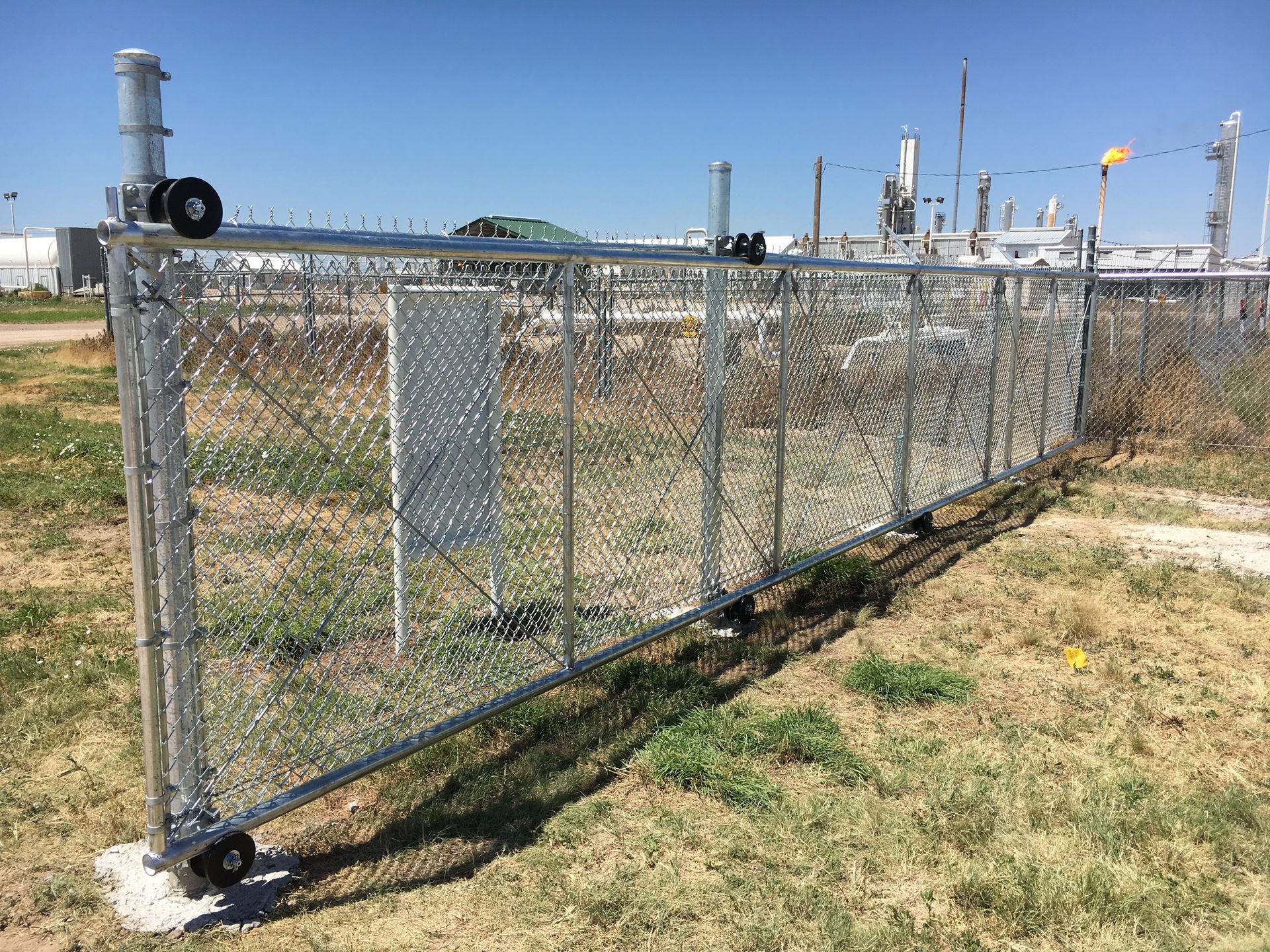
Security Fencing Designed for Working Properties
Commercial Fencing Services in the Wenatchee Valley for business properties requiring wind-rated materials, access control, and perimeter security
Exposed commercial properties in North Central Washington face wind loads that standard residential-grade fencing isn't engineered to handle. Lonestar Fence installs and maintains commercial-grade fencing and access control systems for business properties in the Wenatchee Valley, Douglas County, and Rock Island, selecting materials and post specifications based on what the site actually demands. The difference between a commercial installation and a residential one isn't just scale—it's the combination of higher wind-load ratings, heavier gate hardware, and integrated access control that turns a perimeter fence into a functional security system.
Commercial fencing projects in this region require post depths calibrated to soil conditions that vary significantly across Douglas County. Rocky basalt substrate common on the hillsides above the Wenatchee Valley requires different anchoring methods than the alluvial soils closer to the Columbia River. Lonestar Fence incorporates automatic electric gate openers and access control equipment as part of commercial installations—not as an add-on sourced from a third party, but as a coordinated system installed alongside the fencing structure. This matters because gate hardware and automation components need to be matched to gate weight, swing radius, and traffic frequency before installation rather than retrofitted afterward.
Arrange a commercial property assessment to identify perimeter security requirements and access point specifications for your site.
How Commercial Fencing Addresses Business Security Needs
A commercial fence installation starts with a site review that accounts for vehicle entry points, pedestrian access, sight line requirements, and any municipal or zoning considerations applicable to the property type. Material selection for commercial applications prioritizes load ratings over aesthetics—chain link with tension wire, heavy-gauge metal panels, or ornamental steel are chosen based on the specific security and durability requirements of each site, not a default product recommendation.
Once a commercial fence and gate system is installed correctly, the practical differences are visible immediately: gates cycle on automated timers or keypad entry without manual intervention, perimeter panels hold alignment under wind pressure rather than flexing loose at the post connections, and access points are positioned to manage traffic flow rather than simply mark a boundary. Lonestar Fence's specialization in automatic gate systems means the electrical components, safety sensors, and mechanical hardware are installed as an integrated system—reducing the failure points that appear when automation is added to fencing that wasn't designed for it.
Commercial projects also include ongoing maintenance considerations that differ from residential work. High-traffic gate systems accumulate wear on hinges, actuators, and latch mechanisms faster than manually operated gates, and semi-arid conditions accelerate corrosion on hardware exposed to temperature cycling. Maintenance planning at the installation stage—rather than after problems develop—extends the service life of both the fencing and the automated components.
What Business Owners Ask Before Starting
Commercial fencing projects involve more coordination and specification than residential work. These questions reflect what property owners and site managers commonly need to work through before installation begins in the Wenatchee Valley area.
What types of access control systems are compatible with commercial gate installations?
Automatic electric gate openers can integrate with keypads, card readers, intercom systems, and remote controls—the right combination depends on how many people need access and whether entry needs to be logged or monitored.
How do soil conditions in Douglas County affect commercial post installation?
The transition from alluvial river soils to rocky hillside substrate means post depth and anchoring method must be determined on-site rather than assumed from a standard specification.
Why does gate weight matter when selecting an automatic opener?
Undersized actuators fail prematurely on heavy commercial gates, particularly in high-cycle applications—matching opener capacity to gate mass at installation prevents mechanical failure under regular use in East Wenatchee.
What fencing materials carry appropriate wind-load ratings for exposed commercial sites?
Heavy-gauge chain link with tension wire and solid metal panel systems are rated for higher lateral loads than standard residential fencing, making them appropriate for exposed properties in the Columbia River corridor.
How is maintenance handled after a commercial fence installation is complete?
Hardware inspection, actuator calibration, and corrosion treatment schedules can be established at installation—particularly for automated gate systems that cycle frequently throughout the year.
Lonestar Fence brings the same direct project management to commercial work that applies to residential installations—one point of contact from site assessment through completed installation. Contact the office at (509) 906-4484 to discuss your commercial property's fencing and access control requirements in detail.