
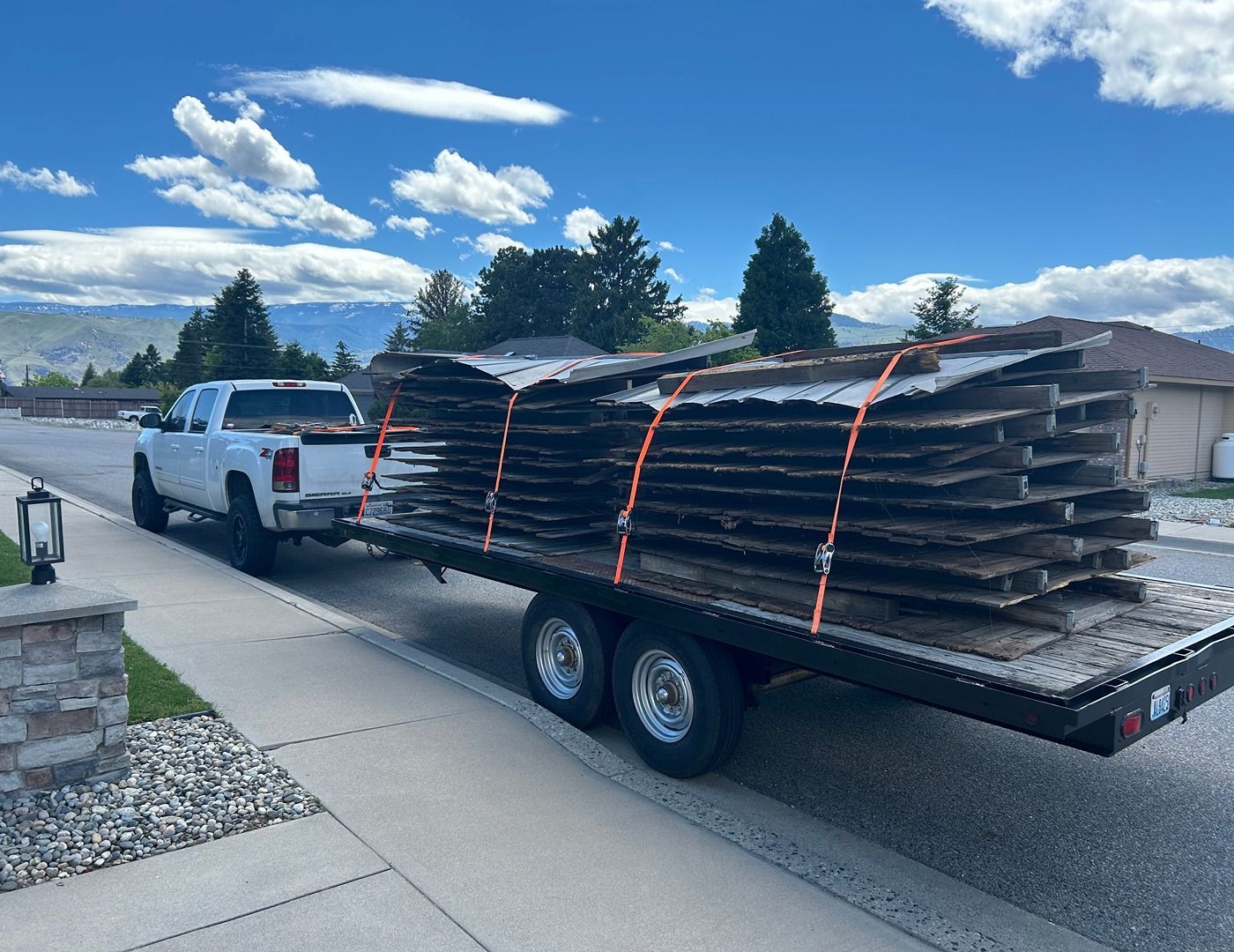
Old Fences Cleared Without Leaving a Mess
Fence Removal in the Wenatchee Valley for properties with damaged, brittle, or unwanted fence structures ready for teardown and site clearing
Pulling an old fence out of the ground is more involved than it looks from the surface—particularly in the Wenatchee Valley, where semi-arid conditions have spent years drying out wood posts until they're brittle enough to splinter during extraction, and where posts set in clay-heavy soils can bind as tightly as if they were poured in place. Lonestar Fence provides complete fence removal for residential and commercial properties across the Wenatchee Valley and Douglas County, handling full deconstruction, post extraction, and debris hauling so the site is clear and ready for what comes next. The service stands alone—removal doesn't require a new installation contract to proceed.
The difficulty of post extraction in this region depends on two factors: how deep the original posts were set and what type of soil surrounds them at grade. Posts set in concrete footings in compacted soil require mechanical extraction rather than manual pulling, and the concrete collar typically comes up with the post rather than staying in the ground—which matters for site clearing because buried concrete left behind creates problems for any subsequent grading or new fence installation. Wood posts that have been in the ground for more than a decade in this climate are often structurally sound above grade while having rotted completely at and below the soil line, which means the extraction approach changes depending on what's actually down there.
Connect with Lonestar Fence to assess what your specific removal project involves before scheduling a teardown date.
What Fence Removal Actually Accomplishes
The removal process follows a consistent sequence: panel and rail deconstruction first, then post extraction, then debris consolidation and hauling. Working panel by panel rather than attempting to pull whole fence sections at once protects adjacent landscaping and hardscape features from incidental damage. Hardware—hinges, latches, tension wire, gate framing—comes off before structural components are removed, both to recover salvageable materials and to prevent hardware from becoming a debris hazard during teardown.
After a complete removal, the site is clear of fence material, extracted posts, and concrete collars—nothing left behind that would interfere with grading, new post placement, or landscaping work that follows. Properties that have been holding a damaged or aesthetically deteriorated fence for years often look noticeably different once the structure is gone, with sight lines and usable yard area restored. Lonestar Fence coordinates removal sequencing with new installation projects when both services are needed, so post-extraction site clearing and new post placement are scheduled to avoid leaving the property without a fence line for an extended period.
Removal scope can also vary by fence type. Chain link removal requires tension release before fabric can be rolled and hauled without creating a tangled hazard; metal panel fencing involves heavier individual components that require careful handling during deconstruction; wood fencing in dry climates splinters under stress, so brittle sections need to be worked carefully to avoid scatter. The approach is adjusted based on what's being removed rather than applied uniformly across material types.
What Property Owners Usually Ask About Removal
Fence removal projects generate specific questions about what gets taken away, what stays behind, and how the work fits into a larger project timeline. These answers reflect what property owners in the Wenatchee Valley typically need to know before scheduling a removal.
What happens to the concrete footings when posts are extracted?
In most cases, concrete footings come up attached to the post during mechanical extraction—Lonestar Fence removes the concrete along with the post so it doesn't remain underground as an obstacle for future installation or grading work.
How does soil condition in the Wenatchee Valley affect how difficult post removal is?
Clay-heavy soils grip post bases tightly, requiring more mechanical force to break the soil seal before extraction, while sandy or dry soils allow posts to release more readily—extraction difficulty is assessed on-site before the work begins.
Why does old wood fencing in dry climates require extra care during removal?
Posts and rails that have dried and become brittle over years of low-humidity exposure tend to splinter rather than break cleanly, which increases debris scatter and requires a more controlled deconstruction approach than fresher wood would need.
Can fence removal be scheduled as a standalone service without committing to new installation?
Removal is offered as a complete, independent service—clients who want a fence taken out and the site cleared without a replacement fence planned immediately can schedule removal on its own.
How is debris disposal handled after the fence comes down?
All fence materials, posts, concrete collars, and hardware are consolidated on-site and hauled off as part of the removal service, leaving the property clear without requiring the owner to arrange separate disposal.
Lonestar Fence manages fence removal projects from initial assessment through final debris haul-out, with the same direct communication that applies to installation work. Call (509) 906-4484 to describe your existing fence structure and get a clear picture of what the removal process involves for your specific property.