Low-Maintenance Fencing That Holds Its Shape
Vinyl fence installation in the Wenatchee Valley for properties where wind loads and post spacing are the deciding factors
Cracked rails, sun-bleached panels, and posts that slowly rotate out of plumb—these are the failure patterns that push property owners toward vinyl. Wenatchee Valley's semi-arid climate is actually well-suited to vinyl fencing because the low ambient moisture eliminates the swelling and freeze cycles that cause vinyl to crack in wetter regions. The challenge here isn't moisture—it's wind. The Columbia River corridor channels consistent wind loads that require tighter post spacing and deeper footings than manufacturers' standard installation guides typically call for.
Lonestar Fence installs vinyl fencing for residential and commercial properties in the Wenatchee Valley, and every job starts with a site-specific quote rather than a per-foot estimate pulled from a rate sheet. Wind exposure, soil composition, and property layout all affect how the system gets installed—a fence line running parallel to the prevailing wind needs different post spacing than one perpendicular to it. Pricing for installed vinyl runs between $40 and $65 per linear foot depending on panel style, post depth requirements, and site prep involved. Proper grading and drainage at the base of the fence line are included in the assessment because standing water at post bases—even in a dry climate—accelerates ground-level deterioration over time.
Schedule a site visit to get a quote based on your actual fence layout, soil conditions, and wind exposure rather than a ballpark number.
How Vinyl Fencing Addresses Wind and Soil Challenges
Vinyl panel systems are only as stable as the posts anchoring them. In the Wenatchee Valley, the decision about post depth and concrete footing diameter isn't made in the office—it's confirmed after evaluating soil at the installation site. Sandy or disturbed fill soil near new construction requires wider footings than undisturbed native soil. Posts set in concrete that doesn't account for the lateral force of repeated wind loading will eventually work loose, causing the panel to rack and the locking channels at the top and bottom rails to separate.
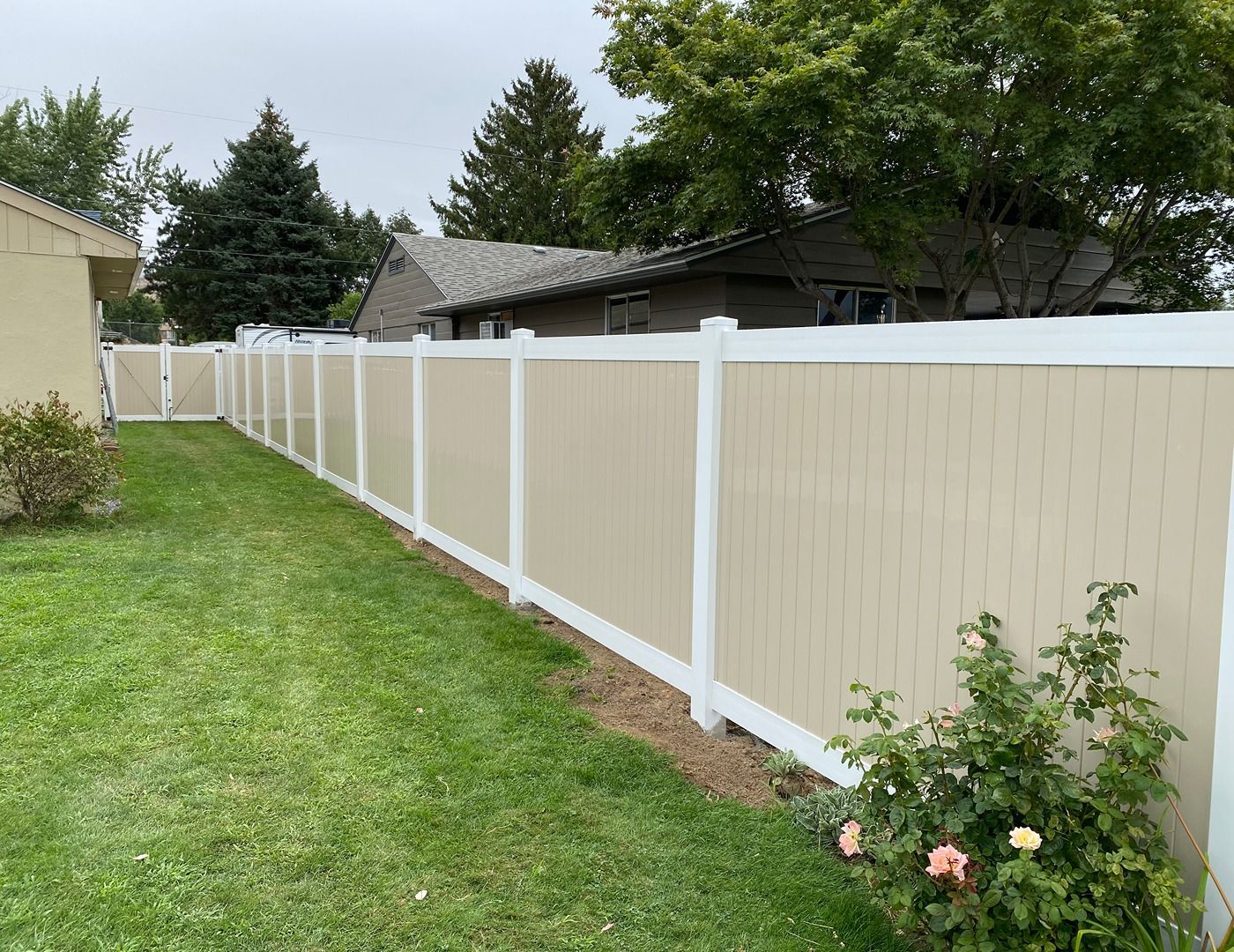
Once installed correctly, vinyl fencing requires no painting, staining, or sealing. You'll notice the color remains consistent season to season without UV greying, and the panel faces stay smooth without the surface checking or splintering that wood develops in low-humidity summers. Gates are hung and adjusted at installation so hardware operates without binding—a detail that matters more as temperatures shift between winter lows and summer highs in the high-desert climate of the Wenatchee valley.
Lonestar Fence evaluates each property individually because vinyl fence layout decisions—where to place gates, how to handle grade changes along the fence run, and which panel height fits local code and privacy needs—vary property to property. Standard panel heights, privacy versus semi-privacy configurations, and post cap styles are all options addressed during the quoting process.
What Property Owners Usually Ask
The following questions reflect what typically comes up when homeowners and commercial clients are evaluating vinyl fencing for properties in the Wenatchee Valley area.
How does the cost of vinyl fencing get calculated for my property?
Installed pricing runs between $40 and $65 per linear foot in the Wenatchee Valley, with variation based on panel style, post depth required by soil conditions, and any grading or drainage prep needed at the base of the fence line.
Why does post spacing matter more here than in other regions?
The Columbia River corridor generates consistent wind loads that apply lateral force across fence panels—closer post spacing reduces the span each panel must bridge unsupported, which is what keeps rails from flexing and channel joints from separating over time.
What happens to vinyl fencing in freezing winter temperatures?
East Wenatchee winters are cold but relatively dry, and properly installed vinyl with adequate post depth handles freeze-thaw cycles without cracking—the risk is greater in climates with wet freeze cycles, which saturate the soil around posts and heave them upward.
How long does a vinyl fence installation typically take to complete?
Most residential fence runs are completed in a single visit once materials are staged, though larger commercial perimeter jobs or sites with difficult soil may require additional time for concrete curing before panel installation continues.
What maintenance is actually required after installation?
Vinyl fencing in this climate needs only periodic washing to remove dust and pollen—there's no recoating schedule, no sealant application, and no annual inspection for splitting or warping that wood fencing requires.
Lonestar Fence provides site-specific quotes with no obligation—call (509) 906-4484 to arrange a property walkthrough and get a detailed breakdown of materials, post requirements, and total installation cost for your fence project.