
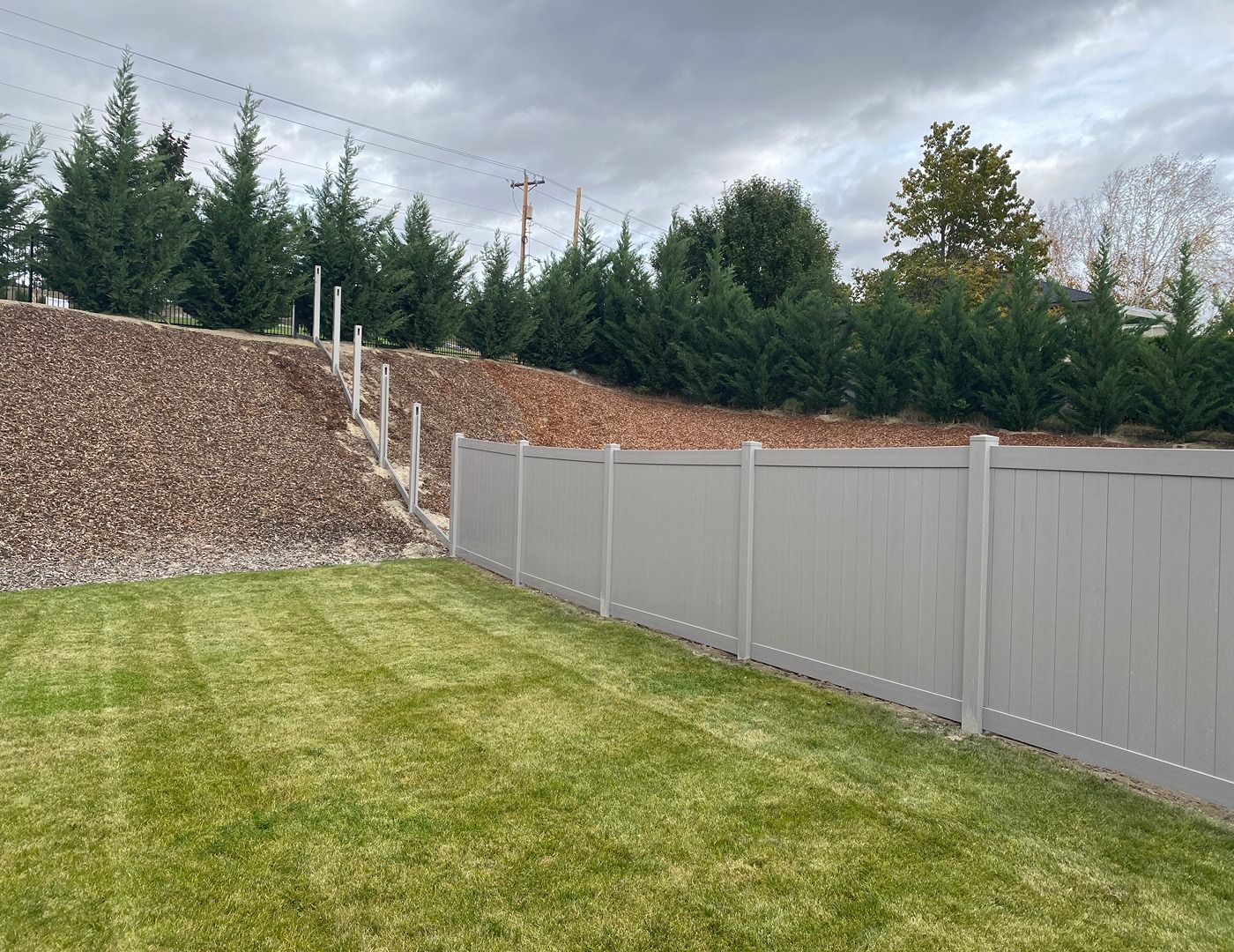
Repairs That Stop Deterioration From Spreading
Fence Repair and Maintenance in the Wenatchee Valley for damaged, sagging, or weathered fences showing UV fading, post lean, or panel failure
Semi-arid climates are harder on fences than most homeowners expect. The combination of intense summer UV exposure, single-digit humidity during dry months, and high wind loads in the Columbia River corridor creates a deterioration pattern that affects wood, vinyl, chain link, and metal fencing in different but predictable ways. Lonestar Fence repairs and maintains existing fences across Wenatchee Valley, addressing the specific failure modes that show up in this climate before isolated damage becomes a full replacement project. A leaning post that's caught early can be reset; one that's left through another freeze-thaw cycle often takes adjacent panels with it when it finally fails completely.
Wood fences in this region dry out faster than coastal installations because low humidity pulls moisture from the grain continuously, causing checking and splitting at the surface and accelerating rot at post bases where ground contact holds whatever moisture does accumulate. Vinyl fences fade and become brittle under sustained UV exposure, eventually cracking at panel corners where thermal expansion and contraction concentrate stress. Chain link loses tension gradually—the fabric sags away from the top rail in sections where wind pressure has repeatedly flexed the posts without being corrected. Repairs address each of these failure patterns at the source: post replacement with proper concrete base depth, panel swap-out, hardware replacement, and paint or stain refresh where surface protection has broken down.
Schedule a fence inspection to identify which sections need repair and whether a seasonal maintenance plan makes sense for your property.
Why Deferred Fence Maintenance Costs More Later
A fence inspection covers the full structure: post plumb and base condition, panel attachment points, gate hardware function, and surface coating integrity. In Wenatchee Valley's climate, the most common finding is post base deterioration that isn't visible from a casual look—the post appears upright until lateral pressure is applied, at which point the rot or concrete failure at grade becomes apparent. Identifying this during a maintenance visit rather than after a wind event is the practical value of scheduled upkeep.
After a repair visit, the visible changes are specific: panels that were pulling away from posts are refastened or replaced, gates that dragged or failed to latch operate cleanly, and sections with faded or peeling finish have fresh surface protection that slows the next round of UV degradation. Lonestar Fence provides standalone repair service—not every fence problem requires a full replacement, and separating repair from new installation means clients aren't pushed toward a larger project when targeted fixes are the right answer.
Maintenance plans address the seasonal nature of fence deterioration in this climate. Post-winter inspection catches frost heave and hardware corrosion from temperature cycling; late-summer inspection identifies UV damage and checks tension on chain link runs before fall wind events put additional stress on already-weakened sections. The maintenance scope depends on fence material, age, and the degree of wind and sun exposure at the specific property.
Answers to Frequent Fence Repair Questions
Fence repair decisions often come down to whether a specific problem can be fixed in isolation or whether it indicates broader structural deterioration. These questions address the repair and maintenance specifics that matter most for fences in the Wenatchee Valley area.
How do you tell whether a leaning post needs resetting or full replacement?
A post that has rotted at the base below grade needs replacement; one that has simply shifted in loose soil due to inadequate original concrete depth can often be pulled, releveled, and reset with a properly poured footing.
What causes vinyl fence panels to crack in dry climates?
Sustained UV exposure degrades the plasticizers in vinyl over time, making the material brittle at the corners and seams where thermal expansion and contraction create repeated stress—panels that have reached this stage need replacement rather than repair.
How often should a wood fence receive fresh stain or paint in the Wenatchee Valley climate?
The low humidity and high UV intensity in North Central Washington breaks down surface coatings faster than the Pacific Northwest coast, making a two-to-three year refresh cycle more realistic than the five-year intervals suggested for wetter climates.
Why does chain link sag near the top rail in some sections but not others?
Sagging typically concentrates in the longest spans between posts and in wind-exposed sections where repeated lateral pressure has stretched the fabric away from the rail—tension wire re-installation or rail replacement restores the geometry.
What does a seasonal maintenance visit include?
Inspection of post stability, panel attachment hardware, gate hinge and latch function, surface coating condition, and tension on any chain link sections—followed by targeted repairs to whatever needs attention before the next weather cycle.
Lonestar Fence handles repair and maintenance as a core service—not a secondary offering squeezed between installation jobs. Call (509) 906-4484 to arrange an inspection and get a specific repair assessment for your fence's current condition.