Metal Fencing Built for Wind and Hard Ground
Metal fence installation in the Wenatchee Valley for properties where wind loads, soil anchoring, and rust resistance are the primary structural concerns
North Central Washington's combination of semi-arid conditions, strong seasonal winds, and variable soil composition across the Columbia River basin sets specific requirements for metal fence installation that don't apply in gentler climates. Lonestar Fence installs durable metal fencing for residential and commercial properties across the Wenatchee Valley and the surrounding service corridor, including Rock Island and the Wenatchee valley. Every installation starts with a site assessment that evaluates wind load direction, soil type, and post depth requirements before any material is ordered—because metal fence systems that fail in this region almost always fail at the post anchor, not at the panel.
The installation process covers site assessment, soil preparation, post installation with concrete anchoring appropriate for the specific ground conditions, panel attachment, and finishing. Rust-resistant construction is the baseline for all metal fencing in this area—the semi-arid climate means panels don't face constant moisture, but irrigation overspray, winter precipitation, and bare-soil contact at post bases create localized corrosion conditions that require appropriate coating or material selection from the start. Post depth and footing diameter are determined by the wind load direction relative to the fence run, not a flat regional standard.
Request a site assessment to review wind exposure, soil conditions, and panel options before committing to a material or configuration.
The Difference Between Adequate and Correct Metal Fence Installation
Metal fence panels exert significant leverage on posts during wind events—the wider the panel span, the greater the rotational force applied to the post base. In the Wenatchee Valley wind corridor, this force is not occasional; it's a consistent seasonal load that the footing system must be engineered to absorb. Posts anchored with undersized concrete footings will gradually rotate, pulling panel attachment hardware loose and causing panels to drop or misalign. The correct footing diameter for a given post height and panel span is calculated during the site assessment, not assumed from a standard spec sheet.
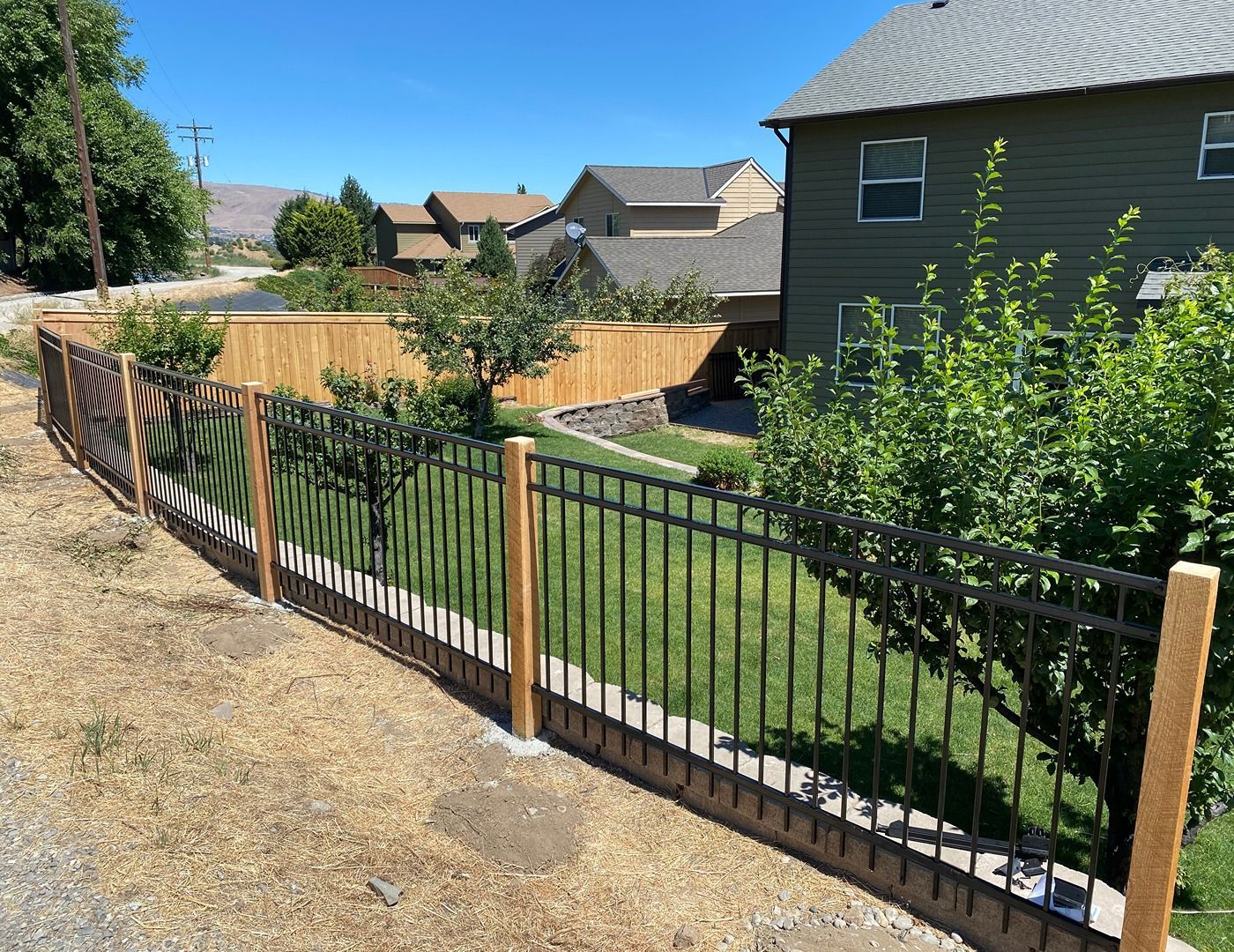
After a properly executed metal fence installation, panels sit level and plumb without visible gap variation between sections, post caps are sealed to prevent internal moisture accumulation, and gates operate without binding across the full seasonal temperature range—metal expands and contracts measurably between the Wenatchee Valley's summer highs and winter lows, and gate hardware that doesn't account for that range will bind within the first year. Lonestar Fence handles all metal fence types excluding masonry, including ornamental, tubular steel, and commercial-grade configurations for ranch and single-family home applications.
Quick turnaround on residential metal fence projects is available once site assessment and material selection are confirmed—larger commercial perimeter installations are scheduled based on scope and site access requirements. The service scope covers full installation including finishing, but does not include masonry work such as brick or stone post surrounds if those are part of a larger design plan.
Questions Before Starting Your Project
Metal fence projects in the Wenatchee Valley area involve site-specific decisions that affect both the installation approach and the long-term performance of the fence system. These are the questions that come up most often.
Why does post footing size vary across a single property?
Soil composition changes even within a single lot—areas with compacted native soil can support smaller footings, while sections with disturbed fill or sandy substrate require wider concrete volumes to achieve equivalent lateral stability against wind loading.
What metal fence types does Lonestar Fence install?
The service covers ornamental metal, tubular steel, and commercial-grade metal fence systems for both residential and commercial properties across Wenatchee Valley—masonry components such as brick or stone post surrounds are outside the installation scope.
How does the Wenatchee Valley climate in the Wenatchee Valley affect metal fence longevity?
Lower ambient humidity slows corrosion compared to coastal regions, but localized moisture from irrigation overspray and seasonal precipitation at post bases creates conditions where rust-resistant coatings or material selection at the outset matters significantly for long-term performance.
When should a gate be designed as part of the initial fence plan rather than added later?
Gates should be incorporated from the start because post placement, footing size, and panel alignment all need to account for gate opening width and swing clearance—retrofitting a gate into an existing fence run typically requires replacing at least one post and adjusting adjacent panel attachment.
How is wind load direction factored into installation decisions?
Fence runs perpendicular to the prevailing wind direction receive the highest lateral load and require tighter post spacing and deeper footings than runs parallel to wind flow—this is evaluated during the site visit using property orientation and local exposure conditions.
Lonestar Fence serves residential and commercial properties across the Wenatchee Valley, Rock Island, and the wider North Central Washington corridor—call (509) 906-4484 to schedule a site assessment and discuss material options for your metal fence project.