Gates Designed Around Your Property's Actual Layout
Custom gate fabrication in the Wenatchee Valley for residential and commercial access points where standard sizing, wind loads, and site-specific clearance requirements don't align
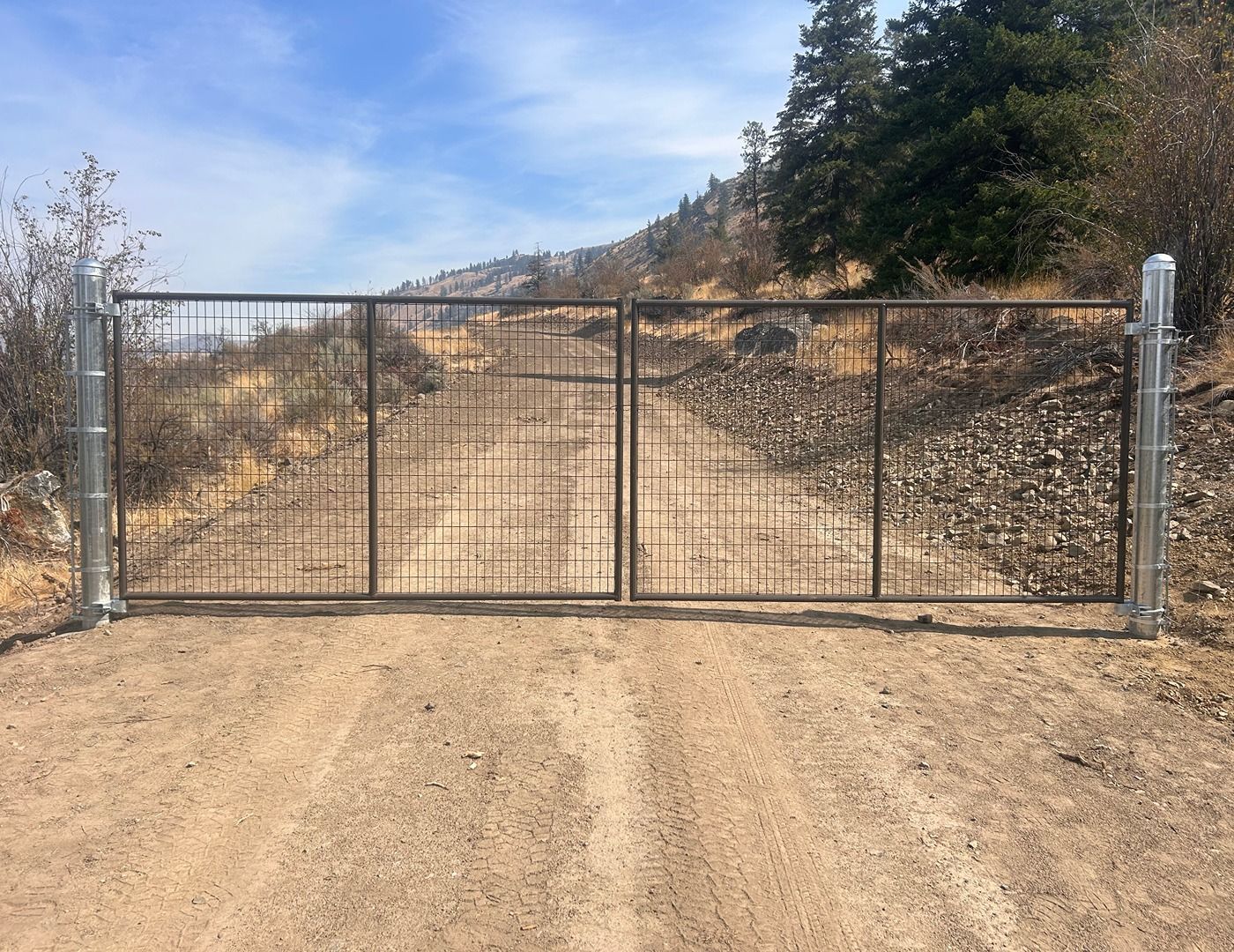
The Wenatchee valley's property layouts—ranging from tight residential lots in the Wenatchee Valley to working ranch parcels across Douglas County—create access point requirements that stock gate widths and off-the-shelf hardware simply don't accommodate. Lonestar Fence designs and fabricates custom gates for both residential and commercial properties, building each gate to fit the specific opening dimensions, functional requirements, and aesthetic intent of the installation site. The process starts with a bespoke design phase that accounts for opening width, clearance height, swing direction, surface material, and whether a gate operator will be part of the finished installation.
Fabrication is completed either on-site or in the shop depending on the scope and material complexity of the project. Metal fabrication is the core of the work, and the design accounts for the mechanical realities of the Wenatchee Valley environment: gates in this wind corridor are subject to consistent lateral loading that standard hinges and frames aren't built to handle long-term. Frame gauge, hinge placement, diagonal bracing within the gate frame, and latch hardware are all specified during the design phase—not chosen from a standard parts list after fabrication is complete. Gate operator installation is a primary service focus, meaning the structural preparation for automation is built into the gate itself rather than retrofitted after the fact.
Set up a design consultation to go over your access point dimensions, intended use, and whether a gate operator fits your property requirements.
What Custom Gate Fabrication Actually Accomplishes
A fabricated gate that fits the opening precisely—accounting for seasonal expansion, soil movement at the post base, and the swing arc across the actual surface material—operates without adjustment for significantly longer than a standard gate shimmed to fit an irregular opening. The design phase for each gate includes measuring the opening at multiple heights because post lean or foundation settlement in the Wenatchee Valley variable soil conditions often means openings aren't perfectly plumb, and a gate built to nominal dimensions will bind at the top or drag at the bottom within the first season.
After installation, you'll notice the gate swings through its full arc without contact at the frame edges, the latch engages cleanly without lifting or forcing, and if an operator is included, the automation cycles without mechanical resistance that strains the motor. Lonestar Fence builds for both residential entry aesthetics—decorative scroll work, panel infill patterns, powder coat finishes—and commercial functional requirements where the priority is cycle durability and security hardware compatibility rather than decorative detail.
Single-swing, double-swing, and slide gate configurations are all available depending on the opening width and the clearance available for the gate's travel path. Slide gate configurations are often the right answer for driveways where a swinging gate would conflict with grade change or vehicle traffic patterns—this is a decision addressed during the design consultation based on the actual site layout, not a default recommendation.
What Clients Ask Before Custom Gate Work Begins
Custom gate projects involve more site-specific decision-making than standard fence installation. These questions reflect what property owners across the Wenatchee Valley and Douglas County typically work through before fabrication begins.
How is a custom gate sized when the opening isn't perfectly square?
Each opening is measured at multiple points—top, middle, and bottom—because post lean, foundation movement, or original installation variance often means the opening dimensions vary by an inch or more, and the gate frame is built to the actual clearance rather than a nominal width.
Why does diagonal bracing inside a gate frame matter for this region?
Wind loading in the East Wenatchee corridor applies lateral force across the full face of a gate every time a wind event occurs—without internal diagonal bracing, gate frames rack over time, which causes the latch to misalign and puts the hinges in a bind rather than in their designed load path.
What is involved in preparing a gate for operator installation?
Gate operator compatibility requires that the gate frame and hinge system be built to handle the mechanical forces of automated cycling—hinge gauge, frame stiffness, and latch hardware are specified during the design phase so the operator can be installed without structural modification after fabrication.
How do slide gates and swing gates differ in terms of site requirements?
Swing gates require clear arc space on the interior or exterior of the opening and work best on level approaches, while slide gates travel parallel to the fence line and are better suited for sloped driveways or tight approaches where a swinging gate's arc would conflict with vehicles or grade change.
What materials are used in custom gate fabrication?
Metal fabrication is the core material for all gates Lonestar Fence produces—steel is the standard structural material, with finish options including powder coat for color and corrosion resistance, and infill options such as tube spacing, panel patterns, or decorative elements determined during the design phase.
Lonestar Fence fabricates custom gates for residential entries, commercial access points, and ranch properties across the Wenatchee Valley and the surrounding Douglas County area—call (509) 906-4484 to arrange a design consultation and get a quote based on your specific opening dimensions and functional requirements.